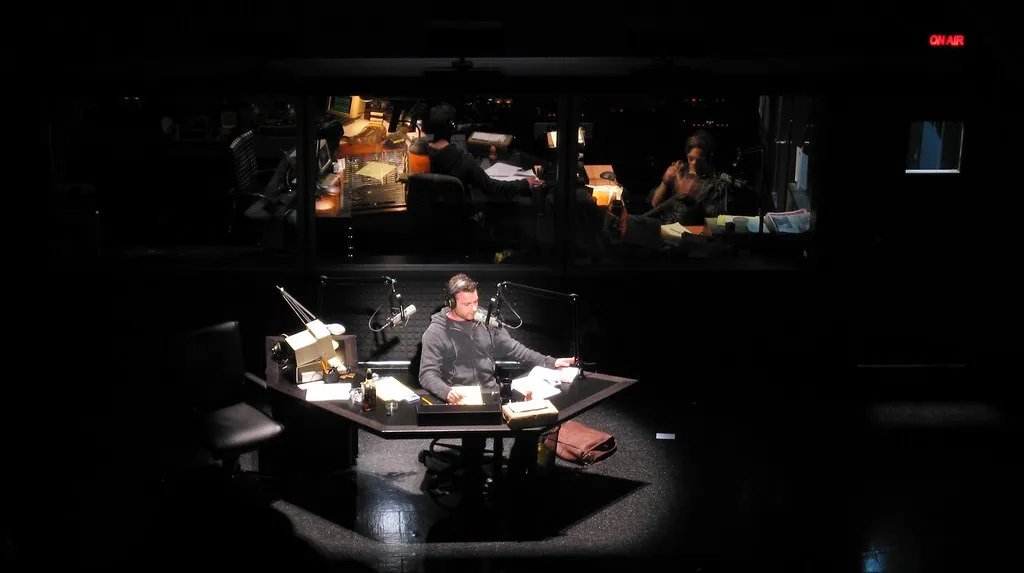
Once I got comfortable turning articles into audio, I got cocky and decided to try something harder: turning an entire hundred-thousand-word manuscript into an audiobook with AI.
The first night humbled me. Problems that are completely invisible in a short script all surfaced at book length—tone drift, broken chapter breaks, a mountain of post-production. Each one was its own lesson.
Here’s everything I stepped in and the workflow I eventually settled on. If you’re planning to turn a long document, a course, or an entire book into audio, this should save you a lot of late nights.
The short version: short scripts need a tool, long ones need a process
With a few thousand words, you write a clean script, drop it in, and the output is usually usable. But a hundred-thousand-word audiobook won’t hold up on the tool alone. You have to build a process yourself: how to segment, how to keep the voice consistent, how to post-produce. Every step needs a rule.
People without a process do what I did the first night—convert everything in one go, then spend the whole night cleaning up the mess.
The first problem: after three thousand words, the tone drifts
This was the earliest and most frustrating issue I found.
The same voice reads the first three thousand words perfectly fine, then at some point the speed, the pauses, even the pitch start to wander slightly. Each section sounds okay on its own, but listened to back to back, it stops feeling like the same person.
The reason isn’t hard to grasp: with very long text, the surrounding context pulls on the model in both directions. Later passages get subtly influenced by earlier content, and the rhythm drifts further and further off.
My fix: cut the text into small chunks and feed them one at a time. I settled on never more than fifteen hundred words per chunk, separated by chapter headings. Each chunk is generated independently, so the tone stays stable. The cost is more manual work, but it’s cheap compared to redoing the whole book.
The second problem: segment by structure, not by word count
At first I took a shortcut and split by “every two thousand words.” Disaster.
Hard cuts land in the middle of sentences, or split a complete paragraph in two. The listener gets cut off, then the next segment starts from half a sentence that makes no sense.
The right way is to split by structure. One chapter per file, one section per file. Before cutting, scan to confirm every break lands at a natural close—the end of a thought, the end of a subheading. A chunk can be longer or shorter; it just can’t end mid-sentence.
The mindset that saved me: treat every chunk as its own short voiceover, then stitch them together with intros and outros. It keeps the pressure low and the quality steady.
The third problem: the voice must never change
This is the most overlooked and most fatal issue in long-form.
In a short script, switching voices is no big deal. But in a hundred-thousand-word book, if chapter three suddenly has a different timbre, the listener snaps out of it instantly—or assumes the file is corrupted.
So lock it in from day one: the whole book uses one voice, one set of speed and pitch parameters. I write those parameters at the top of the project and copy them into every chunk, never touching them by accident. If I want to tweak mid-project, I re-run everything, not just one chapter.
One more detail: sample rate and output format have to match too. Front half at 44.1kHz and back half at 22kHz creates an obvious density gap when spliced together. These “invisible little things” are exactly what separates good long-form from sloppy.
The fourth problem: post-production is ten times bigger than you expect
For short scripts, post-production is maybe de-noising and leveling volume. For long-form, it’s a full assembly line.
My most painful mistake was converting all hundred thousand words in one go and only then starting post-production. I found some sections loud and some quiet, some with mouth noise, no intros or outros at all—which meant listening through everything again and fixing it one by one.
Now I break post-production into three gates and verify as I go:
Gate one, de-noise and remove mouth clicks. Process each chunk the moment it’s converted; don’t hoard them for later.
Gate two, match the volume. Use loudness normalization to bring every chunk to a consistent level so nothing jumps between sections.
Gate three, add intros, outros, and transitions. A short chapter-title read at the top of each chapter and a small closing cue at the end tell the listener “this chapter is over.”

The night I broke it
Embarrassingly, almost all my mistakes came from rushing.
That first night I thought “convert everything at once and I can publish tomorrow,” so I dumped the whole hundred thousand words in. It took a while, spat out a pile of files, and I started listening, excited—then progressively colder. The tone had drifted, the breaks were wrong, the volume was uneven, and worst of all, I couldn’t tell which file belonged to which chapter.
That night taught me two things: long-form has no “one shot” mode, only “one chunk done well at a time.” And file naming has to be decided up front, or you’ll regret it.
My naming now is “chapter number + chapter name + chunk number,” like “03-Chapter-Three-02.wav.” However many files I have, I can tell at a glance what each one is and where it goes.
The math after a hundred thousand words
End to end, it took a handful of evenings (conversion plus post-production). Paying a human voice actor to record a hundred thousand words would be a completely different order of time and money—which is exactly why I chose AI.
But I’ll be honest: an AI audiobook still doesn’t reach the level of a professional recording studio. What it delivers is clean, stable, listenable, and extremely cheap. What it can’t do is put performance into every line. If your book needs heavy emotional acting, AI works as a draft, but key chapters still deserve a human.
For the goal of “turning content into audio so more people can listen,” AI is more than enough, and the barrier is shockingly low.
Three tips before you start
If you’re about to attempt long-form, three practical notes. Start with twenty thousand words, not a hundred thousand—enough to run the whole pipeline once, cheap enough to fail. Write your parameters and naming rules on a sticky note and keep them on screen, because the real risk isn’t difficulty, it’s forgetting how you set things up halfway through. And keep a per-chapter checklist: tone drift, break points, volume, intros and outros. That list catches a problem before it grows.
One more thing people overlook: backups. A hundred thousand words split into thirty chunks is thirty pieces of effort. I keep four folders—source, segmented, generated, and post-produced—and save a copy of each. Once the file count climbs, the real danger is losing a file or overwriting one by accident. Thirty seconds of backup saves a whole evening.
Long-form has no shortcut, but it does have a process. Get the process right and a hundred thousand words is just the same task repeated thirty times.
Where to start
If you’re only doing article-to-audio so far, begin with my three-month commute experiment. To understand why long-form has these limits, the TTS fundamentals will answer it. A hundred-thousand-word project is really just a few hundred three-thousand-word chunks stacked together—get each small piece right, and the whole book holds up.