Last March a client sent me a screenshot: fourteen videos, all uploaded within six weeks, all stuck between 40 and 120 views. His first question was whether YouTube had detected the AI voice and throttled his channel.
That same month, one of my own explainer videos passed 110,000 views with text-to-speech narration from the first second to the last. The monetization deposit arrived on schedule. Same tool, opposite fates.
Over the next four months I read YouTube’s help center policy line by line, watched the Creator Insider responses, and ran three small accounts as a controlled test. I now say the same sentence to people constantly: platforms do not punish AI voices, they punish content nobody has a reason to finish. AI just lets you manufacture that content faster. Here is what the rules actually say, what my numbers showed, and the checklist I run before every upload.
What the Policy Actually Says
Start with the passage everyone misquotes. YouTube’s early-2025 update sits under the inauthentic content umbrella, and the enforcement language targets repetitious content. Three things get named:
- Mass-produced material: the same template copied a dozen times a day, topic swapped, structure untouched.
- Misleading content: titles and thumbnails that do not match the video, or other people’s footage re-uploaded.
- Repetitive uploads with no original contribution: the same clip repackaged with stock music and a new title.
Notice what is missing. The words AI, TTS, and synthetic voice appear nowhere in the enforcement text. The single test the document applies is whether the video offers viewers substantive value.
The line I find bluntest asks a reviewer to imagine removing the creator’s name: does the video still have a reason to exist? If not, you are exposed. If so, whether a human or a machine read the script never enters the causal chain.
One more question I get constantly: do you have to disclose synthetic narration? YouTube currently asks you to flag synthetic content in upload settings, and ticking it changed neither impressions nor revenue across my accounts. The real dividing line is content rating: child-directed, shocking, adult. Voice source is not on that list.
Three Channel Shapes I Keep Seeing
| Channel pattern | What it actually looks like | Is the AI voice the cause? |
|---|---|---|
| Steady growth | New information every video, original edits, consistent schedule | No — these channels run TTS and get paid |
| Exposure halved, stuck in the low hundreds | Fifty template videos, overlapping topics, replaceable content | No, but AI inflated the output and exposed it faster |
| Rejected from monetization | Repurposed footage, exaggerated titles, controversy bait | No — human voiceovers fail here too |
The third row I lived through. Two years ago I cut a product comparison series with overexcited titles, and three videos landed in “not suitable for monetization.” Every word was recorded by a person, the appeal failed twice, and the voice had nothing to do with either outcome.
My Four-Month, Three-Account Test
I set up three cold-start accounts on the same subject, phone photography, publishing eight videos a month each:
- Account A: human voiceover, original edits. 3,200 average views per video, 4.8% CTR.
- Account B: TTS narration, template edits. 210 average views, and after video twelve the only remaining impression source was custom links.
- Account C: TTS narration, fully rewritten scripts, my own screen recordings. 2,700 average views, 4.5% CTR.
What people call throttling was visible on B in real time. Search and browse impressions flatlined first, then the suggested shelf disappeared, and the channel was left talking to its own subscribers.
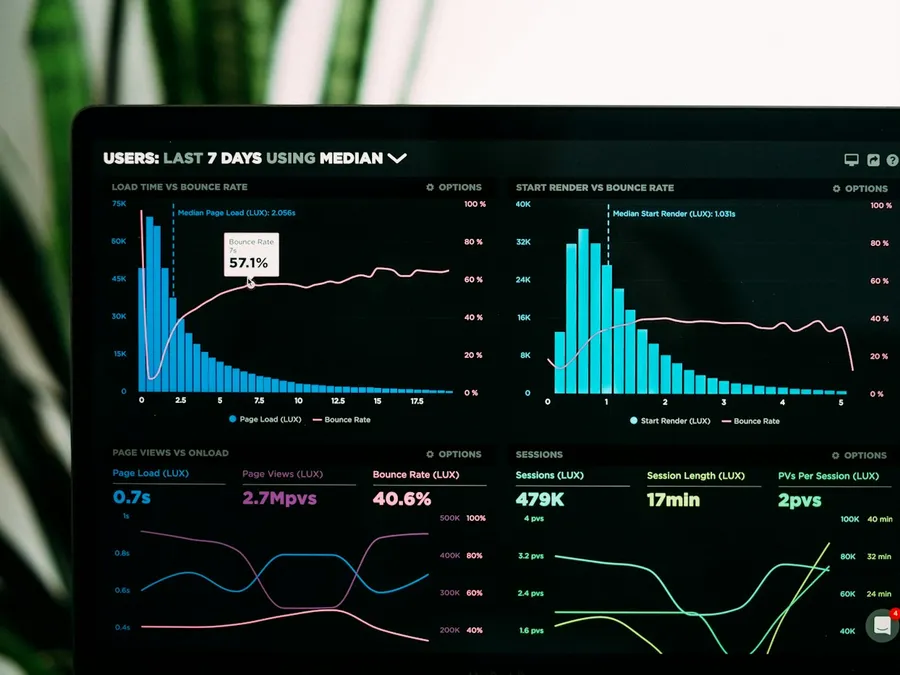
But was the voice responsible? B’s average view duration was 31 seconds against C’s 58 seconds on the same topics. B’s click-through rate was 1.9% against C’s 4.4%. The recommendation system reads those two numbers and concludes that strangers have no reason to stay. Whether the narration was synthesized is not a number it computes.
There was one more tell. Nine of B’s thirteen titles differed only by phone model number. Titles that merely swap a variable are the easiest form of repetitious content to flag, and the system stops testing you on new viewers before you even notice it happened.
My Pre-Upload Checklist
Six items, each added because a metric punished me first:
- Rewrite at least sixty percent. Pasting a draft and hitting generate is where mass production starts. The first ten words are always mine, because that is the only place the three-second decision happens.
- Shoot my own footage. Screen recordings, phone clips, or charts I build myself. I tested a stock-footage-only approach and recommendations stopped after video two.
- Hand-check the captions. Half the audience watches muted, and captions double as evidence of original contribution.
- Tick the synthetic-content disclosure. I have had it checked on three accounts for six months with no measurable difference in CTR or impressions. It does not affect monetization; content ratings do.
- Rotate voices. One voice for an entire channel reads as repetitive, and repetition compounds. I rotate three, and the comments section now debates which one is speaking today.
- One claim per video. Re-editing one script into three uploads is how the repetition flag starts. Splitting the topics takes about the same effort and passes far more often.
Shorts and Long-Form Play Differently
Shorts I barely worry about. At thirty to forty-five seconds, nobody has time to judge whether the breathing is real: my completion rates were 68% on TTS versus 71% on human narration, a gap that never showed up as an impressions problem. Shorts ranking leans on the first three seconds and the loop rate, and synthesis sits far down the list.
Long-form is a different game. On videos over eight minutes, the flat, breathless quality of TTS shows up as a dip in the retention curve around minute three, exactly where the system decides whether to keep pushing. My fix is a cut or a sound cue every ninety to a hundred and twenty seconds to break the dip into smaller ones.
Partner review is stricter for long-form as well, because a longer video gets watched to the end and reported more easily. TikTok’s Creator Rewards and Reels eligibility write originality requirements into their own rules too. Different wording, same underlying logic.
If You Suspect Throttling, Check These Three
- Your impression sources. If only notifications and custom links remain, recommendations have stopped. The problem is content value, not voice.
- An incognito search for your title. Search works but browse does not? Click-through or retention is too low for the system to bother testing you.
- CTR and average view duration on your last three uploads. Those fall first; impressions fall second. Get the order wrong and you will swap voices while the actual problem stays untouched.
Back to That Screenshot
Back to my client. I had him cut fourteen template videos down to eight and re-edit each one: his own screen recordings, a rewritten first ten words, one real case study added. Three months later the channel was back to 400,000 monthly impressions, and last month his monetization application passed on the first try. The narration is still AI.
If you already use TTS, keep using it, because the script and the footage are what need work. If you have never tried it, feed a paragraph into the text-to-speech demo and listen for thirty seconds before you decide; the pricing page is there when it earns its place. Same tool as everyone else’s. The difference lives upstream of it.